Scallop Seamless Pattern Template: A Strategic Tool for Creative Professionals
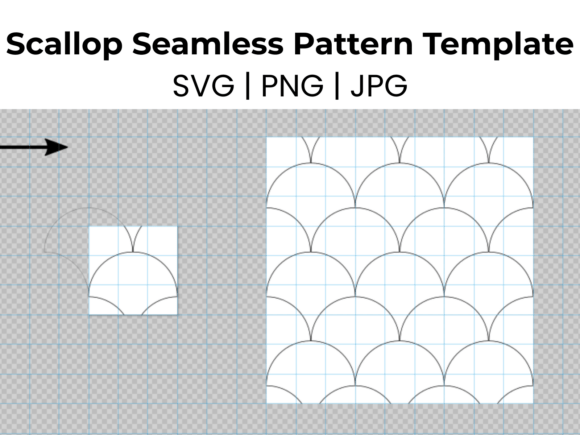
The Scallop Seamless Pattern Template is a versatile resource designed to streamline the creation of repeating patterns. Whether you're a surface pattern designer, digital paper creator, or fabric designer, this template offers a structured approach to building seamless designs. By providing a consistent shape and layout, it enables you to focus on creativity while ensuring technical accuracy in your work.
Why the Scallop Seamless Pattern Template Matters
For creative professionals, consistency and efficiency are key to delivering high-quality work. The Scallop Seamless Pattern Template supports these goals by offering a reusable framework that simplifies the design process. Instead of starting from scratch each time, you can place your artwork, illustrations, or motifs within the scallop shape and duplicate it to build a seamless repeat.
This strategic tool helps you maintain visual harmony across your designs, which is essential for branding and customer experience. It also saves time, allowing you to experiment with different layouts and variations without sacrificing quality.
Strategic Use of the Scallop Seamless Pattern Template
Intentional use of the Scallop Seamless Pattern Template requires understanding when and how to apply it. For instance, if you're working on a collection of fabric prints, using the template ensures that each design aligns with your brand's aesthetic and technical standards. This consistency not only enhances the final product but also strengthens your professional reputation.
Consider the following steps when using the template:
- Define your goal: Determine what you want to achieve with your design—whether it's a specific color scheme, motif, or overall style.
- Choose your elements: Select the artwork, illustrations, or motifs that will fit within the scallop shape.
- Experiment with layouts: Use the template to test different arrangements and see how they interact in a repeating pattern.
- Refine and finalize: Adjust details to ensure the pattern flows seamlessly and meets your quality standards.
By approaching the template with a clear plan, you can maximize its potential and avoid common pitfalls such as uneven spacing or visual clutter.
When to Use the Scallop Seamless Pattern Template
The Scallop Seamless Pattern Template is most effective when used in projects that require repetition and uniformity. This includes creating digital papers, fabric designs, scrapbook pages, or any surface pattern that benefits from a cohesive look.
It’s also useful during the planning phase of a project. By using the template early on, you can visualize how your designs will appear in a repeated format, which helps in making informed decisions about composition, color, and scale.
Additionally, the template is ideal for prototyping. You can quickly generate multiple versions of a design, test them in different contexts, and refine your approach before finalizing the work.
What to Consider Before Relying on the Template
While the Scallop Seamless Pattern Template is a powerful tool, it’s important to consider its limitations. The template itself does not include finished seamless patterns, so you must create the content that fits within it. This means you need a clear vision of what you want to achieve and the skills to execute it effectively.
Another consideration is the need for adaptability. While the template provides structure, it should not restrict your creative freedom. Be open to adjusting the layout or combining it with other elements to suit your unique design needs.
Finally, ensure that your workflow integrates the template seamlessly. If you’re using Inkscape’s Seamless Pattern Editor, familiarize yourself with its features to make the most of the SVG version included in the bundle.
Practical Examples of the Scallop Seamless Pattern Template in Action
Imagine you're designing a line of stationery products for a boutique brand. Using the Scallop Seamless Pattern Template, you can create a consistent design language across all items—notebooks, envelopes, and packaging. This not only reinforces your brand identity but also makes the design process more efficient.
Another example is a fabric designer working on a new collection. By placing floral motifs within the scallop shape, you can generate a seamless pattern that can be used for clothing, home décor, or accessories. The template allows you to test different arrangements and ensure the pattern looks cohesive at scale.
For a scrapbook designer, the template can help create a unified look across multiple pages. By repeating the same scallop shape with different illustrations, you can maintain a thematic consistency that enhances the overall storytelling of the scrapbook.
Long-Term Value and Strategic Planning
Incorporating the Scallop Seamless Pattern Template into your workflow can provide long-term value by improving productivity and consistency. Over time, this can lead to better results, stronger client relationships, and a more refined creative process.
Strategic planning is essential to leveraging the template effectively. Consider how it fits into your broader goals, whether it's expanding your portfolio, improving your brand presence, or increasing your efficiency. By aligning the template with your objectives, you can unlock its full potential.
Additionally, the template supports continuous learning. As you experiment with different designs and layouts, you’ll gain insights into what works best for your style and audience. This knowledge can inform future projects and help you make more confident decisions.
Conclusion: Intentional Use for Better Outcomes
The Scallop Seamless Pattern Template is more than just a design tool—it's a strategic asset that can enhance your creative process and support your professional goals. By using it intentionally, you can improve your productivity, maintain consistency, and achieve better results in your work.
Remember, the success of any tool depends on how you use it. Approach the Scallop Seamless Pattern Template with clarity, purpose, and a willingness to adapt. With the right mindset, you'll be able to harness its power and elevate your designs to new levels of quality and impact.